
Key Takeaways
- A commercial reverse osmosis system typically runs from about $8,000 for a small 1,500 GPD unit to $150,000+ for high-output industrial plants above 50,000 GPD.
- The membrane skid is rarely the whole story. Pretreatment, installation, and freight often add 20 to 40 percent to the sticker price.
- Feed water quality is the single biggest cost driver. Brackish well water, high silica, or seawater each change the system design and the price.
- Operating cost matters more than purchase price over a 10-year life. Energy, membrane replacement, and antiscalant usually outweigh the upfront number.
- Buying on capacity alone is a mistake. Size for your real peak demand plus recovery losses, not the number on a competitor’s quote.
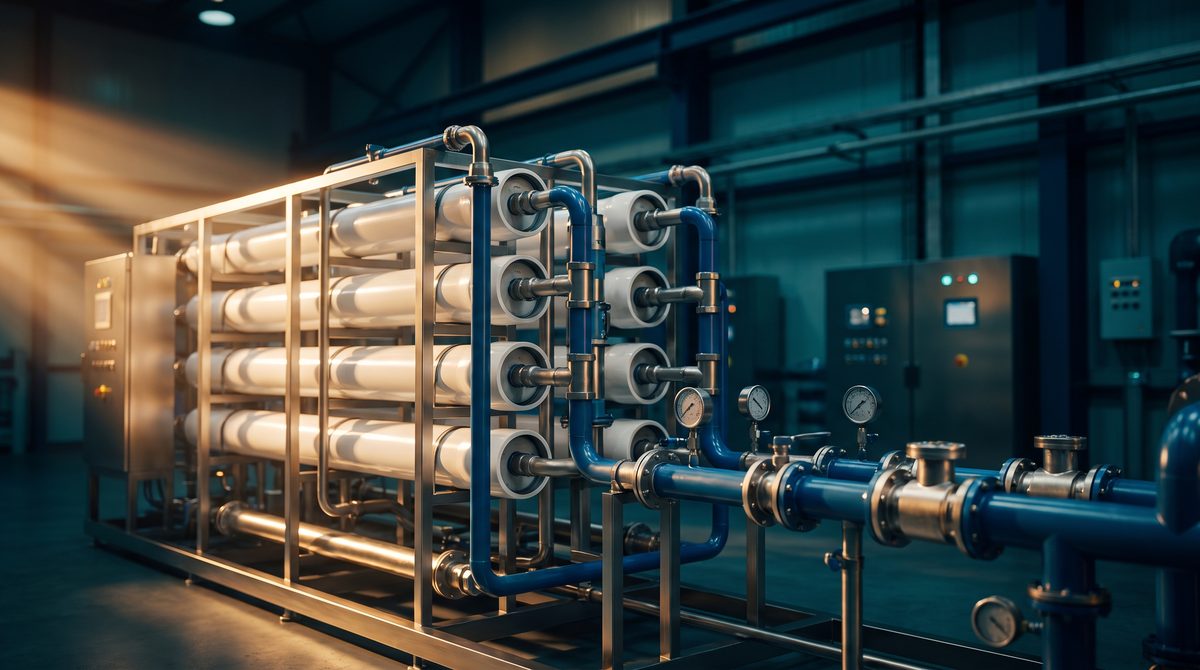
Ask three vendors what a commercial reverse osmosis system costs and you’ll get three very different answers. That’s not evasion. It’s the honest reality of a machine that gets custom-built around your water, your flow rate, and your discharge rules. Still, buyers deserve real numbers to plan around. Here’s how the pricing actually breaks down, and where the money goes that nobody puts on the first quote.
What a Commercial RO System Actually Costs in 2026
For planning purposes, here’s a realistic range by output. These figures cover the RO skid itself with standard pretreatment for typical municipal or good-quality well feed water. They don’t include difficult source water, extensive site work, or building modifications.
- 1,500 to 3,000 GPD: roughly $8,000 to $18,000. Common for restaurants, small manufacturing, and light commercial use.
- 5,000 to 10,000 GPD: roughly $18,000 to $40,000. Mid-size commercial and process water applications.
- 12,000 to 25,000 GPD: roughly $40,000 to $85,000. Larger manufacturing, bottling, and institutional systems.
- 50,000 GPD and above: $100,000 to well past $150,000. Industrial process water, boiler feed, and municipal supply.
Seawater desalination sits in its own bracket. The high-pressure pumps, energy recovery, and corrosion-resistant materials push seawater systems well above brackish RO of the same output. If you’re treating seawater, budget accordingly and read our seawater desalination guide before you compare quotes.
Where the Rest of the Money Goes
The membrane skid is the part everyone quotes. The parts nobody leads with are where budgets get blown.
Pretreatment
No RO membrane survives raw feed water for long. Sediment filtration, carbon for chlorine, and often a water softener or antiscalant injection protect the membranes. On challenging water with high iron, hardness, or silica, pretreatment can rival the cost of the RO unit itself. Skimp here and you’ll pay for it in dead membranes within a year.
Installation and freight
A 25,000 GPD system is heavy, and it ships on a pallet or crate that isn’t cheap to move. Rigging, plumbing, electrical, and startup commissioning are real line items. For larger systems, plan on installation adding 15 to 30 percent to the equipment cost.
Storage and repressurization
RO produces water at a steady trickle, not on demand. Most commercial sites need a storage tank plus a delivery or booster pump to push treated water where it’s needed at usable pressure. That’s another few thousand dollars that rarely appears on the headline quote.
The Cost That Outlives the Purchase
Over a decade, what you paid on day one is often the smaller number. Operating costs stack up quietly:
- Energy: the high-pressure pump is the main draw. Recovery rate and feed pressure decide your power bill.
- Membrane replacement: RO membranes last three to five years with good pretreatment, far less without it. Replacement is a scheduled expense, not a surprise.
- Consumables: prefilters, carbon, and antiscalant on an ongoing basis. Stock them from a reliable parts and consumables source so you’re never down waiting on a cartridge.
This is why the cheapest quote often becomes the most expensive system. A unit designed for a tight recovery rate or poor pretreatment burns money every month it runs.
How to Size It Right (and Not Overpay)
Two numbers drive your system size: peak daily demand and recovery rate. Recovery is the share of feed water that becomes usable permeate. A system running 50 percent recovery needs twice the feed water of the volume you actually use, and that changes both your source and your discharge planning.
Buy for your genuine peak, add a margin for membrane fouling over time, and resist the urge to oversize “just in case.” An oversized RO system cycles inefficiently and costs more to run. If you’re early in the process, our commercial RO buyer’s guide walks through the sizing math in detail.
Frequently Asked Questions
Why won’t vendors give a flat price?
Because feed water quality changes everything. The same output number can mean two completely different systems depending on whether you’re treating clean municipal water or high-silica brackish well water. A real quote follows a water analysis.
Is a commercial RO system worth it versus buying treated water?
For most sites using more than a few hundred gallons a day, on-site RO pays back within one to three years against delivered or bottled water. High-volume users see the fastest return.
What’s the cheapest way to lower the total cost?
Invest in pretreatment and right-sizing, not a smaller skid. Protecting your membranes and matching the system to real demand cuts the 10-year cost far more than shaving the purchase price.
Ready to price a system around your actual water? Contact AMPAC Water Systems for a quote based on your feed water analysis and daily demand, not a generic catalog number.
Sources and further reading
- NSF/ANSI 58: Reverse Osmosis Drinking Water Treatment Systems
NSF - the certification standard for residential and light commercial RO systems. - American Water Works Association
AWWA - standards and research for the drinking water industry.