
Key Takeaways
- TDS (total dissolved solids) measures everything dissolved in your water: minerals, salts, and metals combined. It’s a general quality indicator, not a safety verdict.
- The EPA’s secondary standard for TDS is 500 mg/L, a taste-and-aesthetics guideline rather than a health limit.
- A TDS meter tells you the quantity of dissolved solids, never the type. High TDS from calcium is harmless; high TDS from arsenic or lead is not.
- Very low TDS isn’t automatically better. What matters is what those solids are.
- If TDS is high and a full test shows harmful contaminants, reverse osmosis is the most reliable way to bring it down across the board.
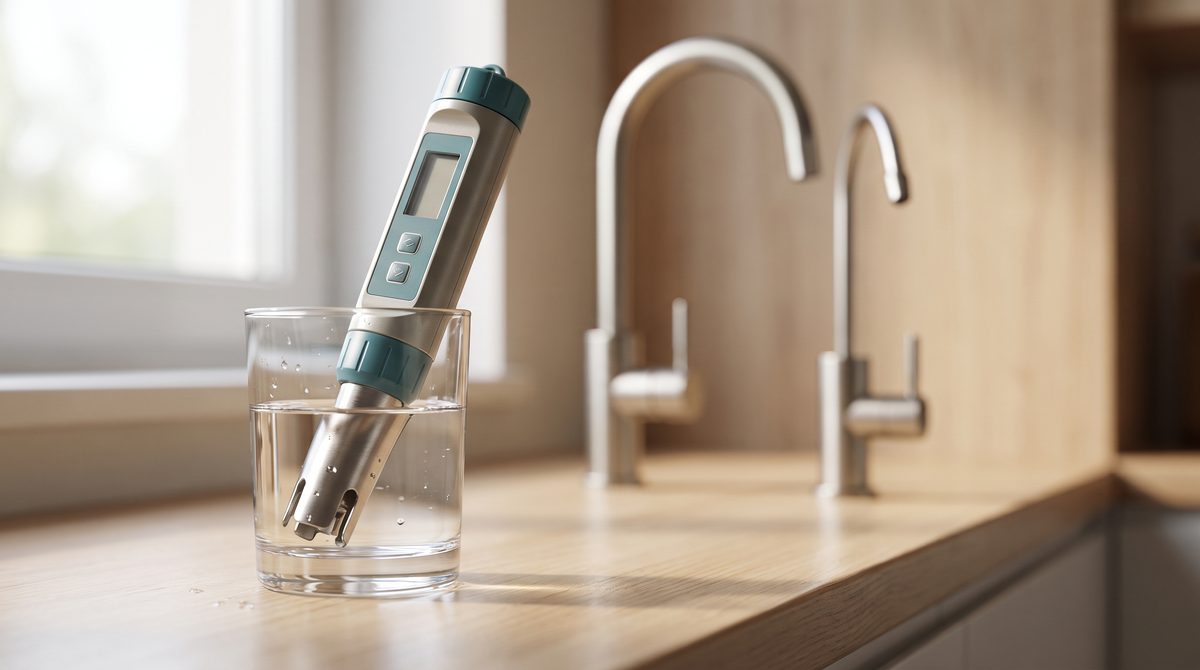
TDS is the number everyone quotes and few people understand. A salesperson dips a meter, shows you a scary reading, and suddenly you “need” a system. The reading is real, but on its own it tells you far less than people claim. Here’s what TDS actually means, and when it’s worth acting on.
What TDS Really Measures
Total dissolved solids is the combined weight of everything dissolved in your water: calcium, magnesium, sodium, potassium, chlorides, sulfates, and any dissolved metals. A TDS meter estimates this by measuring electrical conductivity, since dissolved ions carry current. More dissolved solids, higher conductivity, higher reading. It’s fast and cheap, which is exactly why it gets misused.
The Numbers, and What They Mean
The EPA lists TDS as a secondary standard at 500 mg/L. “Secondary” is the important word: it’s about taste, color, and hardness, not health. Rough guideposts:
- Below 300 mg/L: generally considered good-tasting water.
- 300 to 600 mg/L: acceptable; many quality tap and well waters land here.
- 600 to 1,000 mg/L: noticeable taste, possible hardness and scaling issues.
- Above 1,000 mg/L: often unpleasant and worth investigating the source.
Note these are aesthetic thresholds. Water at 450 mg/L of mostly calcium is perfectly safe; water at 150 mg/L that includes arsenic is not.
The Big Limitation Nobody Mentions
A TDS meter measures quantity, never composition. It cannot tell calcium from lead, or beneficial minerals from toxic metals. That’s the whole catch. A low TDS reading is not a clean bill of health, and a high one is not proof of danger. Only a certified laboratory test identifies which contaminants are present and at what levels. Anyone using a TDS pen as a safety test is misleading you, intentionally or not.
Is Low TDS Better?
Not inherently. Reverse osmosis produces very low TDS water, often under 50 mg/L, and it tastes clean because the dissolved solids, including any contaminants, are gone. Some people prefer the taste of water with some mineral content, which is why remineralization is a popular add-on. The point isn’t to chase the lowest possible number; it’s to remove what shouldn’t be there while keeping water you enjoy drinking.
When High TDS Is Worth Treating
Treat based on what a full test reveals, not the TDS number alone. If your lab panel shows high TDS driven by harmful contaminants, or you’re dealing with hard water that scales appliances and RO membranes, reverse osmosis addresses both at once. It strips dissolved solids across the board, which is why it’s the standard for high-TDS or contaminated supplies. A point-of-use reverse osmosis system handles drinking and cooking water; whole-house treatment covers everything. If you haven’t tested yet, our guide on how to test your home water quality is the place to start.
Frequently Asked Questions
Is a high TDS reading dangerous?
Not by itself. High TDS can be entirely harmless minerals or it can include contaminants. The meter can’t tell the difference, so pair it with a lab test.
What TDS level should drinking water be?
Below the EPA’s 500 mg/L secondary standard is a reasonable aesthetic target, but composition matters more than the number.
Does reverse osmosis lower TDS?
Yes, dramatically. RO typically reduces TDS to under 50 mg/L by removing the dissolved solids that make up the reading.
Have a high TDS reading and want to know what’s actually in your water? Contact AMPAC Water Systems and we’ll help you read your lab results and match a system to them.
Sources and further reading
- Secondary Drinking Water Standards
US EPA - the non-enforceable guidance covering taste, odor, staining, hardness and total dissolved solids. - Saline Water and Salinity
USGS - the salinity classifications that separate fresh, brackish and seawater feed. - Learn About Water
Water Quality Association - industry reference on contaminants and treatment methods.