
Key Takeaways
- Nitrate is invisible, odorless, and tasteless. The only way to know your level is a lab test, not your senses.
- The EPA limit for nitrate in drinking water is 10 mg/L (as nitrogen). Infants and pregnant women are most at risk above that.
- Reverse osmosis and ion exchange are the two proven ways to remove nitrate. Carbon filters and standard softeners do not touch it.
- Reverse osmosis removes 85 to 95 percent of nitrate and handles other contaminants at the same time, which makes it the practical whole-solution for most wells.
- Nitrate often signals a bigger problem: agricultural runoff or septic seepage into your aquifer. Test annually if you’re on a well.
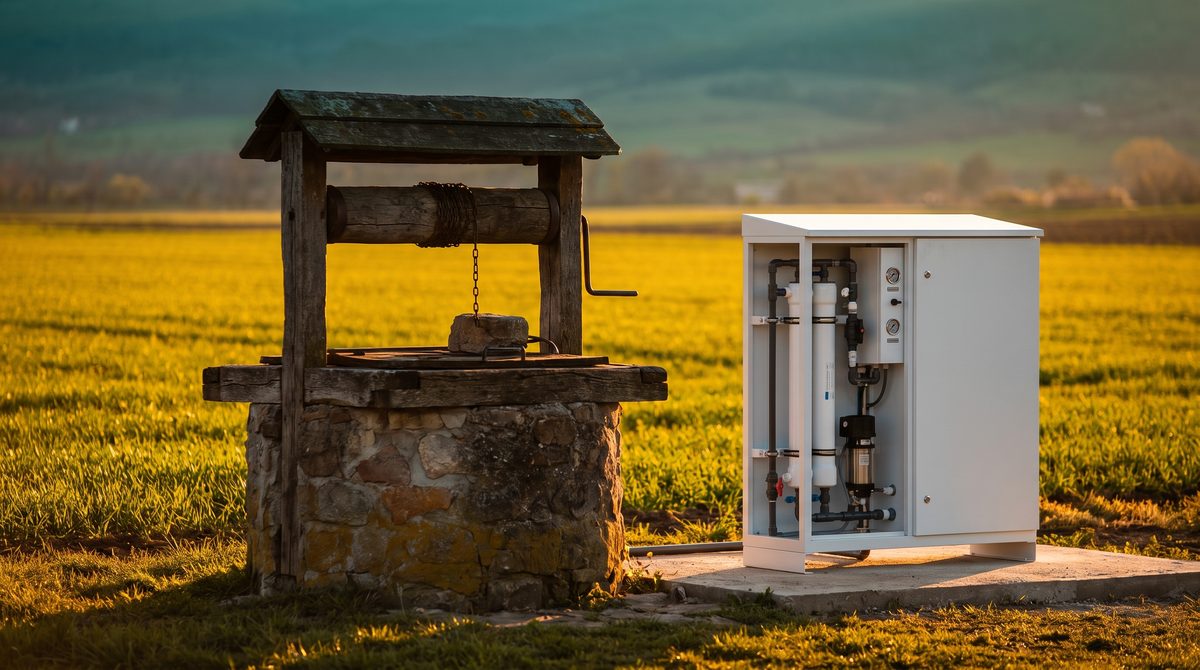
Nitrate is the contaminant well owners underestimate most. It doesn’t cloud your water or change the taste, so a well can test high for years while everything looks fine at the tap. And in farm country, high nitrate is common, not rare. Here’s what the numbers mean and how to actually get it out.
Where Nitrate Comes From and Why It Matters
Nitrate enters groundwater from fertilizer runoff, animal waste, and failing septic systems. Wells in agricultural areas or downhill from livestock are the usual hotspots. Shallow wells are more exposed than deep ones.
The health concern is real and specific. High nitrate interferes with the blood’s ability to carry oxygen, which is dangerous for infants under six months (the cause of “blue baby syndrome”) and a concern during pregnancy. The EPA sets the limit at 10 mg/L measured as nitrogen. If your test comes back above that, treat it before anyone drinks the water.
What Doesn’t Remove Nitrate
This trips people up. A standard water softener exchanges hardness minerals, not nitrate, so it does nothing here. Carbon filters, the kind in most pitchers and fridge filters, are built for chlorine and taste, not dissolved nitrate. Boiling is worse than useless: it evaporates water and concentrates the nitrate that’s left. If a product doesn’t specifically claim nitrate reduction, assume it doesn’t.
The Two Methods That Work
Reverse osmosis
RO pushes water through a semi-permeable membrane that rejects nitrate along with a long list of other contaminants. Expect 85 to 95 percent nitrate reduction. The advantage is coverage: the same system also cuts arsenic, PFAS, lead, and total dissolved solids, so you solve several problems with one unit. For a whole household, a point-of-entry RO system treats everything; for drinking and cooking only, a point-of-use unit under the sink is cheaper. Browse reverse osmosis systems sized for home and light commercial use.
Ion exchange (nitrate-selective resin)
Nitrate-selective anion exchange swaps nitrate for chloride using a special resin. It’s effective and doesn’t waste as much water as RO, but it only addresses nitrate (and a few similar anions), and the resin needs periodic regeneration with salt. It’s a good fit when nitrate is your only problem and you’re treating high flow rates.
Which One Is Right for Your Well?
If your water has multiple issues, and most well water does, reverse osmosis is usually the better value because it handles them together. If a certified lab test shows nitrate as your single exceedance and nothing else, nitrate-selective ion exchange can be more water-efficient. The honest answer depends on your full water panel, which is why treatment should always follow testing, never precede it.
Test First, Then Treat
Get a certified lab test that covers nitrate, bacteria, arsenic, and a general mineral panel. Retest every year if you’re on a private well, and immediately if a baby or pregnant person will be drinking the water. Nitrate levels swing with the seasons and with the rain, so a single clean test years ago doesn’t mean you’re clear today.
Frequently Asked Questions
Can I smell or taste nitrate in my water?
No. Nitrate is completely undetectable by sight, smell, or taste. Lab testing is the only way to know your level.
Does reverse osmosis remove all the nitrate?
It removes most of it, typically 85 to 95 percent, which brings high-nitrate well water comfortably below the EPA limit in the vast majority of cases.
Is nitrate only a problem for babies?
Infants and pregnant women face the clearest risk, but sustained high nitrate exposure is worth avoiding for everyone. Treat to the EPA limit regardless of who’s in the house.
Not sure what your well needs? Contact AMPAC Water Systems with your lab results and we’ll recommend a system matched to your actual water.
Sources and further reading
- National Primary Drinking Water Regulations
US EPA - the federal maximum contaminant levels referenced throughout this article. - Nutrient Pollution: Sources and Solutions
US EPA - how nitrogen compounds including nitrate reach groundwater. - Learn About Water
Water Quality Association - industry reference on contaminants and treatment methods.