
Key Takeaways
- Reject water (also called concentrate or brine) is the stream that carries away the salts and contaminants an RO membrane rejects. It’s a normal part of how RO works.
- Recovery rate is the share of feed water that becomes usable permeate. Commercial systems typically run 50 to 75 percent; seawater RO runs lower.
- You can’t push recovery to 100 percent. Past a point, the concentrate gets so saturated it scales the membranes and destroys them.
- Concentrate staging, higher-recovery membrane arrays, and reject-water recycling can cut waste meaningfully without risking the system.
- For sites with strict discharge limits or high water costs, pairing RO with concentrate reduction moves you toward minimal or zero liquid discharge.
Every reverse osmosis system splits its feed water into two streams: clean permeate you use, and reject water you don’t. New operators are often surprised by how much goes down the drain. The reject stream isn’t a defect, it’s the mechanism. But how much you waste is a design choice, and there’s real money in getting it right.
What Reject Water Actually Is
An RO membrane lets water molecules through while holding back dissolved salts, minerals, and contaminants. Those rejected substances have to go somewhere, so they leave in a continuous concentrate stream. If your feed water is 500 mg/L TDS and you recover 60 percent as clean permeate, the remaining 40 percent leaves carrying nearly all the original salt, now far more concentrated. That’s the brine.
Recovery Rate: The Number That Governs Waste
Recovery rate is permeate divided by feed water, expressed as a percentage. A system at 60 percent recovery turns 10 gallons of feed into 6 gallons of product and 4 gallons of concentrate. Typical ranges:
- Brackish and municipal RO: 50 to 75 percent recovery, sometimes higher with staging.
- Seawater RO: 35 to 50 percent, because the feed is already near the limit of what membranes can concentrate.
- High-purity industrial RO: varies with the downstream requirement and feed chemistry.
Higher recovery means less waste and lower feed-water cost. But it comes with a hard ceiling.
Why You Can’t Just Turn Recovery Up
Push recovery too high and the concentrate becomes so saturated that sparingly soluble salts, calcium carbonate, calcium sulfate, silica, start precipitating on the membrane surface. That’s scaling, and it’s a fast route to permanent membrane damage and lost output. Antiscalant chemistry and good pretreatment buy you headroom, but physics sets the limit. Chasing recovery without respecting scaling potential trades a small water saving for an expensive membrane replacement.
How to Reduce Reject Water Without Wrecking the System
Concentrate staging
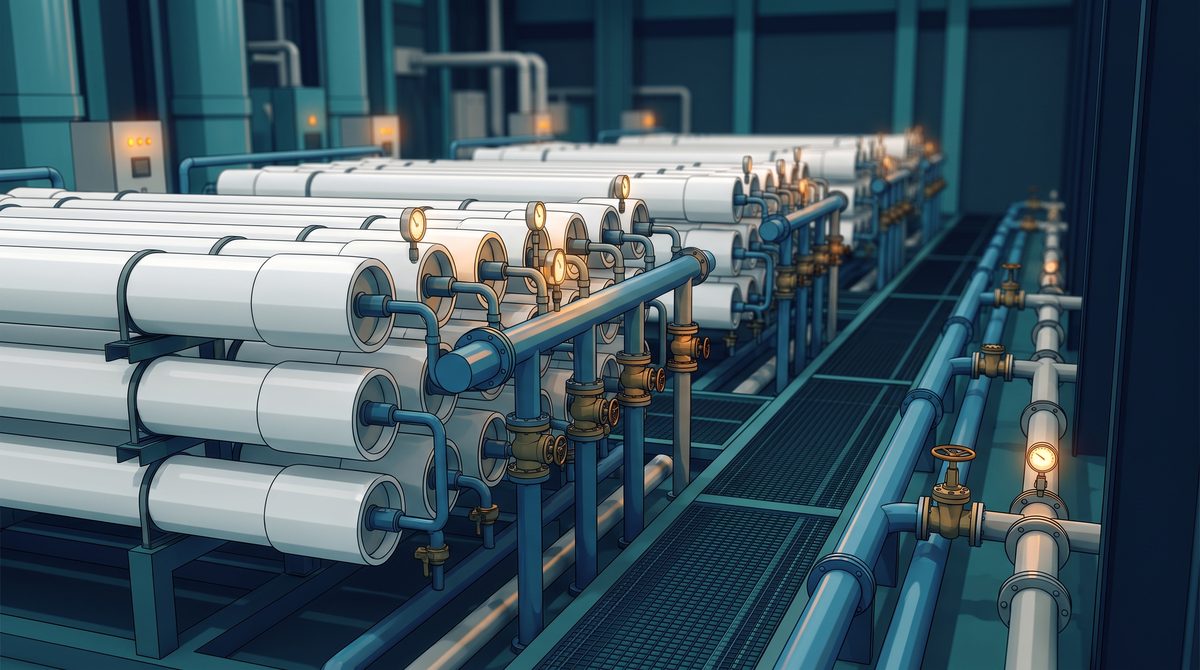
Arraying membrane vessels so the concentrate from the first stage feeds the next (a 2:1 or 3:2:1 array) squeezes more permeate from the same feed and lifts overall recovery safely.
Reject recycling
Blending a portion of concentrate back into the feed recovers usable water, within scaling limits. It’s a common tweak on brackish systems where the reject is still relatively low in TDS.
Put the reject to work
Depending on quality, reject water can serve irrigation, cooling tower makeup, toilet flushing, or process rinse steps that don’t need permeate-grade water. The cheapest gallon to treat is the one you reuse instead of discharge.
Concentrate reduction for near-zero discharge
Where discharge is restricted or expensive, a second-pass or brine concentrator shrinks the waste volume dramatically. Taken to its conclusion, that’s zero liquid discharge, where almost nothing leaves as liquid waste.
The Bottom Line for Operators
Reject water is unavoidable, but wasteful reject water isn’t. Design the array for your feed chemistry, dose antiscalant correctly, and find a beneficial use for the concentrate you do produce. On a high-volume industrial RO system, a few points of recovery translate to real annual savings in water and sewer charges.
Frequently Asked Questions
Is reject water dangerous?
It’s just concentrated feed water, higher in salts and whatever the membrane rejected. It’s not hazardous by default, but disposal has to meet your local discharge limits.
What’s a good recovery rate?
For brackish and municipal feed, 60 to 75 percent is a healthy target. Seawater runs lower by nature. The right number depends on your feed chemistry and scaling potential.
Can I reuse RO reject water at home?
Yes, for non-potable uses like watering plants (if TDS is moderate) or cleaning. Just don’t drink it, and check that dissolved solids aren’t too high for your plants.
Want to design an array that maximizes recovery for your water? Talk to AMPAC Water Systems about a system engineered around your feed chemistry.
Sources and further reading
- Water Reuse and Recycling
US EPA - federal guidance on reclaimed water and reuse applications. - Effluent Guidelines
US EPA - the industry-by-industry discharge limits that drive most treatment decisions.