
Key Takeaways
- Most commercial RO failures aren’t sudden. They’re the predictable result of skipped maintenance, and nearly all are preventable on a schedule.
- Prefilters are the cheapest insurance you own. Change them on a calendar, not when flow finally drops.
- Track three numbers weekly: feed pressure, permeate flow, and permeate quality (TDS or conductivity). Trends warn you before a failure does.
- A 10 to 15 percent drop in normalized permeate flow, or a similar rise in pressure differential, is your signal to clean the membranes.
- Good pretreatment and logging routinely double membrane life versus run-to-failure operation.
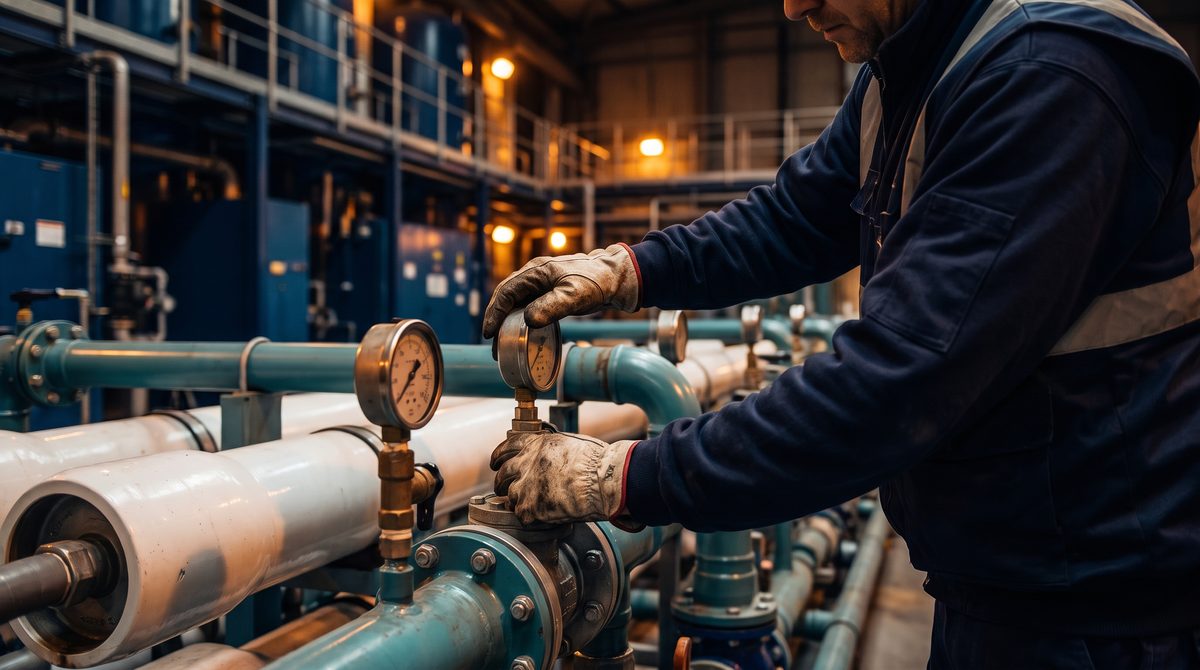
A commercial reverse osmosis system rarely dies without warning. It declines, quietly, while the numbers on the gauges drift and nobody’s watching. The sites that get five-plus years out of their membranes aren’t lucky. They run a schedule. Here’s the preventive routine that protects uptime and pushes expensive replacements further out.
Why Preventive Beats Reactive
Run-to-failure feels cheaper until the failure lands during production. A fouled membrane doesn’t just cut output; it drives up energy use, degrades water quality, and often can’t be recovered by the time you notice. Scheduled maintenance costs a fraction of an emergency membrane replacement plus the downtime around it. The math almost always favors the calendar.
The Three Numbers to Log
You can’t manage what you don’t measure. Record these at the same operating conditions on a fixed schedule, ideally weekly:
- Feed and pressure differential: a rising pressure drop across a stage signals fouling or scaling.
- Permeate flow: a steady decline (normalized for temperature) means the membranes are losing productivity.
- Permeate quality: rising TDS or conductivity in the product water points to membrane degradation or seal problems.
One reading tells you little. The trend tells you everything. Log it so you can see the slope.
The Maintenance Schedule
Weekly
Record feed pressure, pressure differential, permeate flow, and permeate quality. Glance at the system for leaks, unusual noise, or pump cycling. Confirm antiscalant and any chemical dosing pumps are actually feeding.
Monthly
Inspect and replace sediment and carbon prefilters on schedule, or sooner if pressure drop climbs. Prefilters are cheap; the membranes they protect are not. Check chemical inventory and calibrate dosing.
Quarterly
Verify instrument calibration (pressure gauges, flow meters, TDS or conductivity probes). Inspect high-pressure pump and seals. Review your logged trends and compare against startup baselines.
As the trends dictate
When normalized permeate flow drops 10 to 15 percent, or pressure differential rises comparably, clean the membranes (CIP) with the appropriate high or low pH solution for the fouling type. Cleaning at the right time restores performance; waiting too long makes fouling permanent.
Protect the Membranes at the Source
The best maintenance happens upstream. Solid pretreatment, sediment removal, carbon for chlorine, and correct antiscalant dosing, keeps foulants and oxidizers off the membrane surface in the first place. Chlorine damage to a thin-film membrane is irreversible, so carbon media or dechlorination isn’t optional on chlorinated feed. Keep spare filters and consumables on hand so a routine change never turns into unplanned downtime.
Build the Habit, Keep the Uptime
None of this is complicated. It’s a clipboard (or a spreadsheet), a fixed schedule, and the discipline to act on trends instead of alarms. Sites that log religiously catch problems weeks earlier and routinely double the service life of their membranes. If you’d like a maintenance plan tailored to your industrial RO system, we can help build one.
Frequently Asked Questions
How often should I change RO prefilters?
Typically monthly to quarterly depending on feed water and flow, but let the pressure differential guide you. Rising pressure drop means change now, regardless of the calendar.
When do RO membranes need cleaning?
When normalized permeate flow falls 10 to 15 percent or pressure differential rises by a similar margin. Cleaning on that signal restores performance; waiting risks permanent fouling.
How long should commercial RO membranes last?
Three to five years is typical with good pretreatment and maintenance. Neglected systems can lose membranes in a year or less.
Want a preventive maintenance schedule built around your system and water? Contact AMPAC Water Systems for support, spares, and service guidance.
Sources and further reading
- NSF/ANSI 58: Reverse Osmosis Drinking Water Treatment Systems
NSF - the certification standard for residential and light commercial RO systems. - Learn About Water
Water Quality Association - industry reference on contaminants and treatment methods.