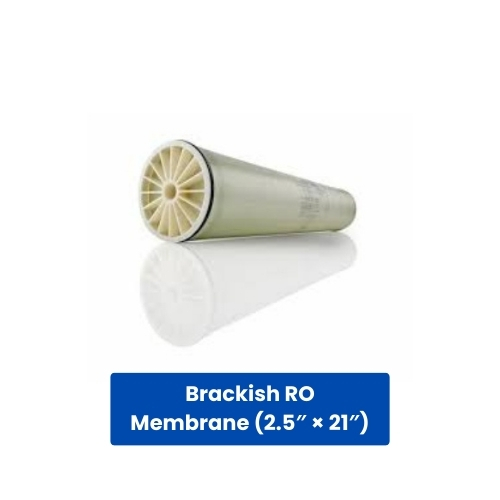
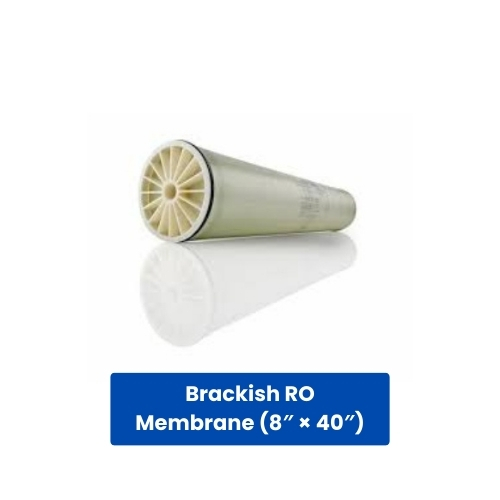
AMPAC stocks thin-film composite membrane elements – including Dow membranes – for brackish water and seawater desalination systems, covering residential, commercial, and industrial reverse osmosis elements in a range of sizes and rejection rates. Many of these come from Dow Chemical Company’s FILMTEC line, valued for steady water production and high flow rates.
Residential units come in 50, 75, and 100 GPD output ratings. Commercial and industrial elements span 300 to 3,500 GPD per element, with rejection rates from 96% to 99.7% TDS depending on the application.
Thin film composite membrane construction sits at the core of modern reverse osmosis. A thin polyamide layer bonded to a support material blocks dissolved solids while letting purified water pass through. That’s how source water – well water, municipal tap water, or seawater – becomes clean product water. This advanced membrane technology lets a small residential unit under a sink do the same basic job as a large industrial plant, just at a different scale.
Plan on replacing your RO membrane every 2-5 years. Feed water TDS, temperature, and daily production volume all affect service life. A spent element shows itself through rising TDS in the product water, reduced flow rate, and increasing pressure differential across the housing. AMPAC carries these elements sized to fit most major residential and commercial RO housings, so swapping in a new one is usually a drop-in replacement.
FAQs – RO & DOW Membranes
How long do RO membranes last?
RO membranes typically last 2-5 years depending on feed water quality, pretreatment effectiveness, and operating conditions. Declining permeate flow, rising salt passage (higher TDS in the product water), or increasing feed pressure needed to maintain output are the usual signs a membrane needs replacement.
What’s the difference between brackish and seawater RO membranes?
Brackish water membranes are rated for lower feed pressures (typically up to 150-600 PSI) and lower salinity, achieving 75-85% recovery. Seawater membranes are built for much higher pressure (800-1,200 PSI) to overcome seawater’s higher osmotic pressure, with lower recovery (35-45%) but higher salt rejection.
What’s the difference between DOW and generic RO membranes?
DOW (FILMTEC) membranes are manufactured to tight, consistent quality-control tolerances and carry documented rejection and flow specs backed by the manufacturer. Generic membranes can perform adequately but vary more in consistency batch to batch, so specs on paper don’t always hold up in practice.
What GPD rating do I need for my RO membrane?
Match GPD rating to your system’s required daily output plus expected feed water temperature and pressure – residential elements typically run 50-100 GPD, while commercial and industrial elements span 300-3,500 GPD per element. Undersizing forces the system to run longer to meet demand, which shortens membrane life.