
Introduction
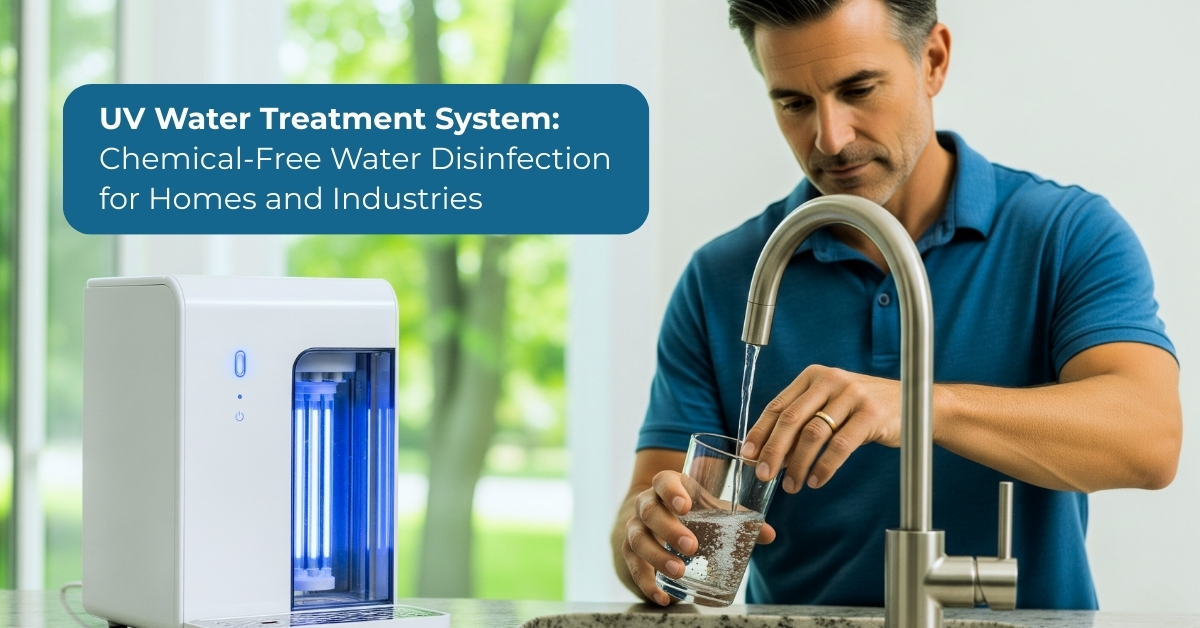
Clean, safe water is essential for health and productivity. While traditional disinfection methods such as chlorine have long been used, they come with drawbacks like taste alteration and harmful by-products. A UV water treatment system offers a modern, chemical-free solution to eliminate harmful microorganisms effectively. By using ultraviolet (UV-C) light, these systems deliver pure, great-tasting water without altering its chemistry.
How Does a UV Water Treatment System Work?
A UV water treatment system channels water through a chamber that houses a UV-C lamp. The light penetrates microbial cell walls and disrupts their DNA, preventing them from reproducing. As a result, pathogens such as bacteria, viruses, and protozoa are rendered harmless in just seconds.
This process is:
- Fast - Disinfection happens instantly as water flows through the chamber.
- Chemical-Free - No chemicals are added, so water tastes fresh and natural.
- Reliable - Works consistently against a wide range of microorganisms.
Benefits of UV Disinfection
- No Chemicals or By-Products - UV doesn’t use chlorine or other additives, ensuring no chemical residues.
- Safe & Eco-Friendly - No harmful by-products are produced, making it safer for health and the environment.
- Low Maintenance - The system requires only occasional lamp and sleeve replacement.
- Energy Efficient - Modern UV lamps consume minimal energy while providing maximum disinfection power.
- Versatile Applications - Suitable for residential, commercial, and industrial water systems.
Where UV Fits in a Water Treatment System
UV treatment is most effective when placed after primary filtration. Sediment filters, carbon filters, or reverse osmosis systems remove impurities and turbidity, ensuring the UV light can fully penetrate the water. This makes UV the “final polish” in a multi-stage purification system, ensuring the highest level of water safety.
Maintenance Tips for UV Systems
- Replace UV Lamps Annually - Even if the lamp still glows, its UV intensity decreases over time.
- Clean Quartz Sleeves - Ensure maximum UV penetration by regularly cleaning or replacing the protective sleeve.
- Check Flow Rates - Maintain recommended water flow to ensure effective disinfection.
- Install with Pre-Filters - Always use sediment or carbon filters to improve UV performance.
Applications of UV Water Treatment Systems
- Homes & Apartments - For safe drinking water free from bacteria and viruses.
- Restaurants & Cafeterias - To ensure hygienic water for food preparation and service.
- Schools & Offices - Provide staff and students with safe, chemical-free water.
- Industrial Facilities - Reliable disinfection for food processing, pharmaceuticals, and laboratories.
- Emergency & Mobile Systems - Essential for disaster relief or remote locations where water safety is uncertain.
Products Related to UV Water Treatment Systems
To keep UV disinfection systems running efficiently, the following products are essential:
Replacement UV Lamps
- UV Lamp for LB5-151B
- UV Lamp for S-5Q-PA
- UV Lamp for SPV-2.5 / SP150-HO
- UV Lamp - LPLO 843 mm
- UV Lamp for S2Q UV Units
Replacement Quartz UV Sleeves
- Quartz Sleeve for LB5-151B
- Quartz Sleeve for UV Model VH200
- Quartz Sleeve for S2Q-PA
- Quartz Sleeve for VH150
- Quartz Sleeve for S-5Q-PA
Replacement UV Controllers
- UV Controller for LB5-151B
Conclusion
A UV water treatment system is one of the most reliable and eco-friendly ways to disinfect water without chemicals. Whether for residential use, commercial kitchens, or industrial operations, UV ensures safe, pure water at every stage. With dependable replacement lamps, quartz sleeves, and controllers, maintaining peak performance is simple and cost-effective.
By combining UV treatment with proven pre-filtration methods, you can achieve the highest standard of water safety and quality for years to come.
Frequently Asked Questions
What are the latest advances in water treatment technology?
Modern water treatment combines advanced membrane filtration (RO, NF, UF), electrochemical processes, AI-driven monitoring, and IoT-enabled remote control. Smart systems from AMPAC Water Systems use real-time sensors to auto-adjust dosing, pressure, and flow, reducing chemical use by up to 30% and energy consumption by up to 25% compared to legacy systems.
How does smart monitoring improve water treatment operations?
IoT-enabled water treatment systems stream operational data (flow rate, TDS, pressure, pH, ORP) to cloud dashboards, enabling predictive maintenance, automatic alarm response, and remote troubleshooting. AMPAC Water Systems integrates SCADA-compatible control panels with remote access on all commercial and industrial installations.
What is the difference between NF and RO membranes?
Nanofiltration (NF) membranes operate at lower pressure (70-150 PSI) and remove multivalent ions, hardness, and color while passing monovalent salts. Reverse osmosis (RO) removes virtually all dissolved solids (95-99%). AMPAC Water Systems engineers specify NF or RO based on your source water quality and product water requirements.
Can water treatment systems integrate with renewable energy?
Yes. Solar-powered and wind-assisted water treatment is increasingly viable, particularly for off-grid and remote applications. AMPAC Water Systems designs energy-efficient systems with variable frequency drives (VFDs) and energy recovery devices that pair well with intermittent renewable power sources.
What certifications should water treatment equipment have?
Key certifications include NSF/ANSI 58 (RO systems), NSF/ANSI 61 (potable water contact), and WQA Gold Seal. Commercial and industrial systems should also meet ASME pressure vessel codes and UL electrical standards. All AMPAC Water Systems installations are engineered to applicable NSF, ASME, and local regulatory standards.
Conclusion
This post explored emerging and proven water treatment technologies reshaping how businesses and municipalities manage water quality. For organizations looking to deploy advanced water treatment solutions, AMPAC Water Systems engineers custom systems using the latest membrane, sensor, and automation technologies. Contact our team at info@ampacwatersystems.com or visit ampacwatersystems.com to discuss your project.
Sources and further reading
- Drinking Water Regulations and Contaminants
US EPA - which contaminants are federally regulated and how those regulations are structured. - Learn About Water
Water Quality Association - industry reference on contaminants and treatment methods. - Basic Information about Your Drinking Water
US EPA - how public water systems are regulated and what a consumer confidence report covers.