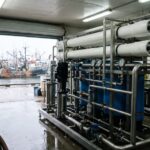


Access to clean, safe drinking water is no longer just a luxury - it’s a necessity for maintaining health, well-being, and overall quality of life. As environmental pollution, aging infrastructure, and chemical contaminants continue to threaten water quality, more households and businesses are turning to Reverse Osmosis (RO) Water Filtration Systems for a reliable solution. At AMPAC Water Systems, we specialize in designing, manufacturing, and delivering state-of-the-art RO systems for residential, commercial, and industrial applications.
In this guide, we’ll cover everything you need to know about Reverse Osmosis Water Filtration Systems, from how they work and their benefits to choosing the right system for your needs.
What is a Reverse Osmosis Water Filtration System?
Reverse Osmosis (RO) is a water purification process that removes up to 99% of dissolved salts, chemicals, bacteria, and other impurities from water. It works by forcing water through a semi-permeable membrane that blocks contaminants while allowing only clean water molecules to pass through.
Unlike traditional filters, RO systems are capable of removing microscopic particles that even advanced carbon filters can miss - such as arsenic, fluoride, lead, nitrates, and microplastics.
How Does Reverse Osmosis Work?
The reverse osmosis process relies on pressure and filtration to produce high-quality water. A standard RO system has multiple stages:
- Pre-filtration
- Removes sediments like dirt, sand, and rust.
- Protects the RO membrane from large particles.
- Carbon Filtration
- Absorbs chlorine, chloramines, and volatile organic compounds (VOCs) that can damage the RO membrane and affect taste.
- Reverse Osmosis Membrane
- The core of the system.
- Filters out dissolved salts, heavy metals, and microscopic contaminants.
- Post-Filtration
- Polishes water for taste and odor improvement.
- Optional UV Sterilization
- Destroys any remaining bacteria or viruses for added safety.
At AMPAC Water Systems, our RO units are engineered for maximum efficiency and long-term durability, ensuring you get consistent, safe water with minimal maintenance.
Key Benefits of Reverse Osmosis Water Filtration Systems
1. Superior Contaminant Removal
RO systems can remove:
- Lead, arsenic, mercury
- Nitrates and nitrites
- Fluoride
- Chlorine and chloramines
- Pesticides, herbicides, and PFAS
- Microplastics and pharmaceutical residues
2. Improved Taste and Odor
RO filtration produces crisp, refreshing water free from unpleasant tastes or smells, making it ideal for drinking, cooking, and brewing coffee or tea.
3. Cost Savings
Instead of spending hundreds of dollars annually on bottled water, an RO system delivers bottle-quality water on demand at a fraction of the cost.
4. Eco-Friendly Solution
Reduce plastic waste by eliminating bottled water use and lowering your environmental footprint.
5. Versatility
Available in residential, commercial, and industrial models, RO systems can handle everything from a family’s daily drinking needs to large-scale desalination for municipalities.
Applications of Reverse Osmosis Systems
At AMPAC Water Systems, we provide RO solutions for:
- Residential Homes
- Under-sink RO systems for drinking water.
- Whole-house RO units for complete protection.
- Commercial Businesses
- Restaurants, cafes, and bars for cooking and beverage preparation.
- Offices for employee hydration.
- Industrial Applications
- Manufacturing processes requiring ultra-pure water.
- Boiler feedwater treatment.
- Power generation and electronics manufacturing.
- Marine and Offshore
- Seawater desalination for ships, yachts, and offshore platforms.
Why Choose AMPAC Water Systems for RO Solutions?
With decades of expertise, AMPAC Water Systems is a trusted leader in advanced water purification technology. Here’s why our customers choose us:
- Custom-Built Solutions
- Each RO system is tailored to your specific water quality and usage needs.
- Premium Components
- We use only high-quality membranes, pumps, and fittings for long-term reliability.
- Energy Efficiency
- Our systems are engineered to maximize water recovery while minimizing waste.
- Global Reach
- Serving clients in the USA and worldwide with both off-the-shelf and custom-designed systems.
- Expert Support
- From water testing to installation and maintenance, we provide full-service support.
Factors to Consider Before Choosing an RO System
When selecting a Reverse Osmosis Water Filtration System, consider:
- Water Source Quality
- Is your water municipal, well, or seawater? Each has different treatment needs.
- Flow Rate Requirements
- Determine how much purified water you need daily.
- Contaminant Profile
- Have your water tested to identify the exact contaminants present.
- Space and Installation
- Under-sink, wall-mounted, or large skid-mounted systems are available.
- Maintenance and Filter Replacement
- Choose a system with easy-to-service components and readily available replacement parts.
Choosing a commercial RO system on the Wasatch Front
Local feed water decides which model fits, and on the Wasatch Front TDS is rarely the limit. Salt Lake City Public Utilities’ 2026 report (2025 data) puts its three city plants at 214 to 259 mg/L TDS and 8.0 to 12.4 grains per gallon of hardness. Its wells and springs, which supplement the streams in summer, reach 796 mg/L and 33.4 grains. Woods Cross City’s 2025 report lists 720 ppm TDS and 23 grains average hardness from deep wells.
| Check | AMPAC Commercial Turnkey listing | Salt Lake City | Woods Cross |
|---|---|---|---|
| TDS | 2,500 ppm max, municipal design | 214-796 mg/L | 720 ppm |
| Hardness | 15 grains max, municipal design | 8.0-33.4 grains | 23 grains average |
| Chlorine | Under 0.1 ppm | 0.64 ppm average | Not listed |
Hardness and chlorine exceed the listed limits; TDS does not. Woods Cross wells average above the 15-grain figure, and the top of Salt Lake City’s well range is more than double it. Salt Lake City’s 0.64 ppm chlorine residual is over six times the 0.1 ppm maximum, so the carbon pre-filter must remove most of it before the membrane. The 1,500 to 6,000 GPD Commercial Turnkey pages list a softener, a KDF and catalytic carbon pre-filter and a UV sterilizer as standard, with optional anti-scalant dosing for hard water.
For well water, Utah’s ground water rule sorts supplies by TDS. Class II runs above 500 and below 3,000 mg/L, which crosses the 2,500 ppm municipal design limit. Class III runs from 3,000 to 10,000 mg/L, which lines up with the 10,000 ppm brackish design limit. A lab analysis shows which side you are on, and AMPAC’s guide to Utah brackish groundwater covers Class III.
Then check feed and drain. The 3,000 GPD AP3000-LX (two 4 x 40 inch membranes, 1 hp pump) lists 33 to 50 percent recovery. That means 6,000 to about 9,100 gallons of feed a day and 3,000 to about 6,100 gallons of concentrate to drain. The 10,000 GPD industrial unit (one 8 x 40 inch membrane, 3 hp pump) lists 33 to 70 percent, tied to feed salinity and hardness. With a quote request, send your utility report or well analysis and your daily volume.
Sources: Salt Lake City Public Utilities 2026 Drinking Water Quality Report, Woods Cross City 2025 Water Quality Report, Utah Admin. Code R317-6-3.
Maintenance Tips for Long-Lasting RO Systems
- Replace Filters Regularly
- Pre-filters: every 6-12 months.
- RO membrane: every 2-5 years (depending on water quality).
- Sanitize the System Annually
- Prevents bacterial buildup.
- Monitor Water Pressure
- Low pressure can reduce efficiency and water quality.
- Check for Leaks
- Early detection prevents costly repairs.
Common Myths About Reverse Osmosis
Myth 1: RO water is wasteful.
Fact: Modern RO systems, like those from AMPAC, are designed for high water recovery rates, minimizing waste.
Myth 2: RO removes essential minerals and makes water unhealthy.
Fact: The minerals removed by RO are often in inorganic forms that the body doesn’t absorb well. You can easily re-mineralize water if desired.
Myth 3: RO systems are hard to maintain.
Fact: With proper installation and scheduled filter changes, RO systems are straightforward to maintain.
The Future of Reverse Osmosis Technology
As water scarcity and contamination challenges grow, RO technology continues to evolve. Emerging trends include:
- Energy-Recovery Devices
- Cutting down operational costs in large-scale systems.
- Smart RO Systems
- Integrated monitoring and app connectivity for real-time water quality checks.
- Hybrid Filtration
- Combining RO with UV, ozone, or advanced oxidation for maximum purification.
At AMPAC Water Systems, we’re at the forefront of these innovations, ensuring our clients always have access to the most advanced water treatment solutions.
Conclusion: Invest in Water You Can Trust
Whether you need a compact home RO system or an industrial-scale water purification plant, Reverse Osmosis remains the gold standard in water filtration. With its proven ability to remove harmful contaminants, improve taste, and save costs, it’s an investment in both health and peace of mind.
At AMPAC Water Systems, we don’t just sell RO systems - we engineer solutions for safe, sustainable, and superior water quality.
Get Started Today
Visit AMPAC Water Systems to explore our Reverse Osmosis Water Filtration Systems or request a custom water treatment solution designed for your needs.
Frequently Asked Questions
What are the latest advances in water treatment technology?
Modern water treatment combines advanced membrane filtration (RO, NF, UF), electrochemical processes, AI-driven monitoring, and IoT-enabled remote control. Smart systems from AMPAC Water Systems use real-time sensors to auto-adjust dosing, pressure, and flow, reducing chemical use by up to 30% and energy consumption by up to 25% compared to legacy systems.
How does smart monitoring improve water treatment operations?
IoT-enabled water treatment systems stream operational data (flow rate, TDS, pressure, pH, ORP) to cloud dashboards, enabling predictive maintenance, automatic alarm response, and remote troubleshooting. AMPAC Water Systems integrates SCADA-compatible control panels with remote access on all commercial and industrial installations.
What is the difference between NF and RO membranes?
Nanofiltration (NF) membranes operate at lower pressure (70-150 PSI) and remove multivalent ions, hardness, and color while passing monovalent salts. Reverse osmosis (RO) removes virtually all dissolved solids (95-99%). AMPAC Water Systems engineers specify NF or RO based on your source water quality and product water requirements.
Can water treatment systems integrate with renewable energy?
Yes. Solar-powered and wind-assisted water treatment is increasingly viable, particularly for off-grid and remote applications. AMPAC Water Systems designs energy-efficient systems with variable frequency drives (VFDs) and energy recovery devices that pair well with intermittent renewable power sources.
What certifications should water treatment equipment have?
Key certifications include NSF/ANSI 58 (RO systems), NSF/ANSI 61 (potable water contact), and WQA Gold Seal. Commercial and industrial systems should also meet ASME pressure vessel codes and UL electrical standards. All AMPAC Water Systems installations are engineered to applicable NSF, ASME, and local regulatory standards.
Conclusion
This post explored emerging and proven water treatment technologies reshaping how businesses and municipalities manage water quality. For organizations looking to deploy advanced water treatment solutions, AMPAC Water Systems engineers custom systems using the latest membrane, sensor, and automation technologies. Contact our team at info@ampacwatersystems.com or visit ampacwatersystems.com to discuss your project.
Sources and further reading
- NSF/ANSI 58: Reverse Osmosis Drinking Water Treatment Systems
NSF - the certification standard for residential and light commercial RO systems. - National Primary Drinking Water Regulations
US EPA - the federal maximum contaminant levels referenced throughout this article. - Per- and Polyfluoroalkyl Substances (PFAS)
US EPA - the current federal position on PFAS in drinking water.