Seawater reverse osmosis (SWRO) watermakers convert raw ocean water into potable fresh water by forcing high-salinity feed water through semi-permeable RO membranes at pressures between 800 and 1,200 PSI. At that pressure differential, dissolved salts, bacteria, and most trace contaminants are rejected by the membrane surface. Typical salt rejection runs 99.4 to 99.7%, producing permeate water below 500 ppm TDS - well within WHO and EPA potable water guidelines, and often below 100 ppm on well-maintained systems with quality seawater feed.
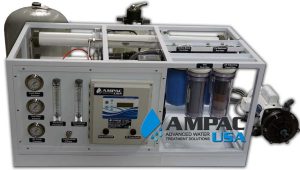
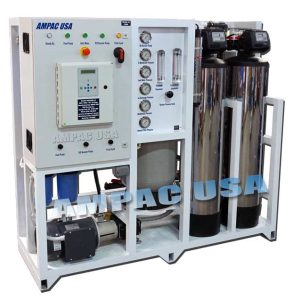
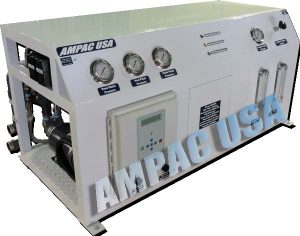
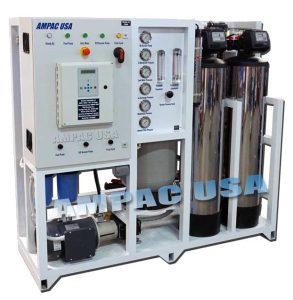
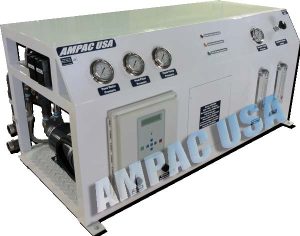
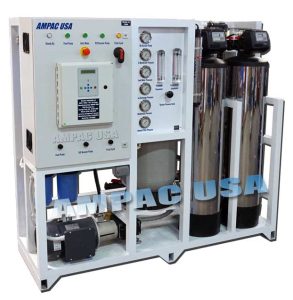
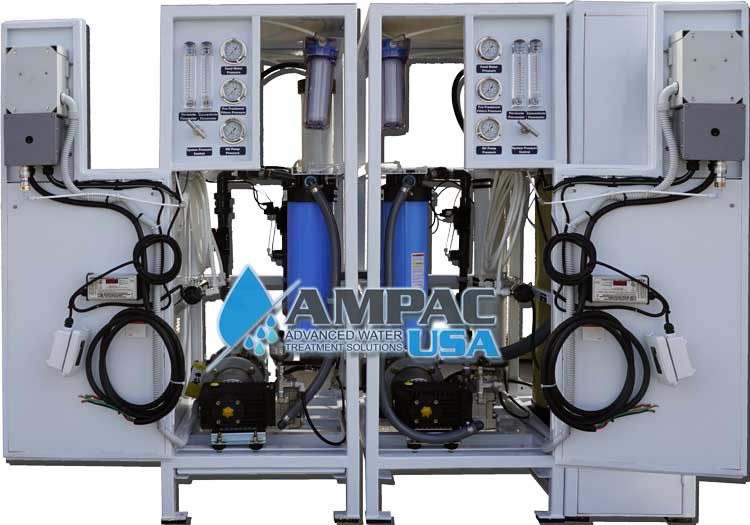
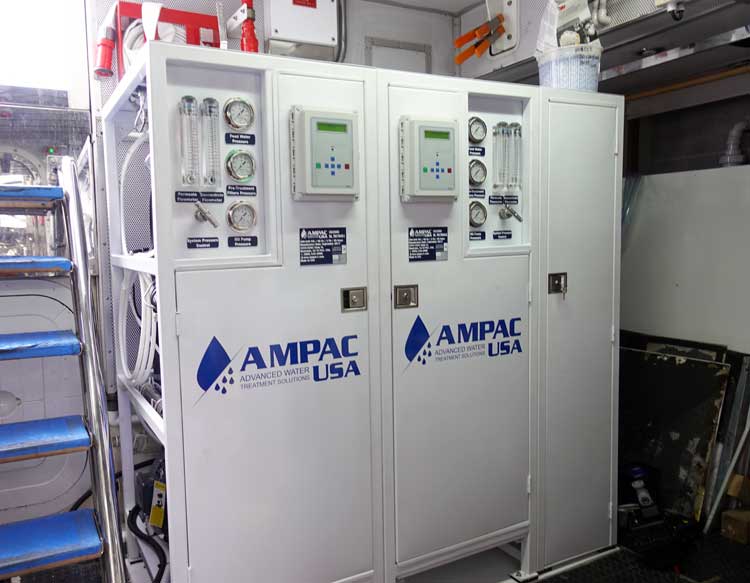
Each AMPAC SWRO system ships as a fully integrated skid assembly. The skid includes the high-pressure pump, pressure vessels and membranes, low-pressure feed pump, instrumentation, and a control panel with automatic shutdown on high/low pressure faults and feed water TDS alarm. All interconnecting high-pressure plumbing is completed at the factory. Field connections are limited to feed water inlet, product water outlet, brine discharge, electrical supply, and pre-treatment integration points.
Pre-treatment required
Pre-treatment is required on every unit. A multimedia or sand filter removes suspended solids and turbidity. A 5-micron cartridge filter provides the final barrier before the high-pressure pump. Antiscalant dosing is recommended, particularly in coastal areas where feed water chemistry varies with tides, algal blooms, or seasonal runoff. Skipping pre-treatment shortens membrane life and voids warranty coverage on the pressure vessels.
Recovery rate on seawater systems runs 35 to 45%. For every 100 gallons fed to the membranes, roughly 35 to 45 gallons become product water; the remainder exits as concentrate brine. Plan feed water supply and brine discharge routing before installation. Energy consumption typically runs 4 to 8 kWh per 1,000 liters of product water depending on feed conditions.
This Unit: Twin Redundant 2×2,000 GPD / 2×7,500 LPD
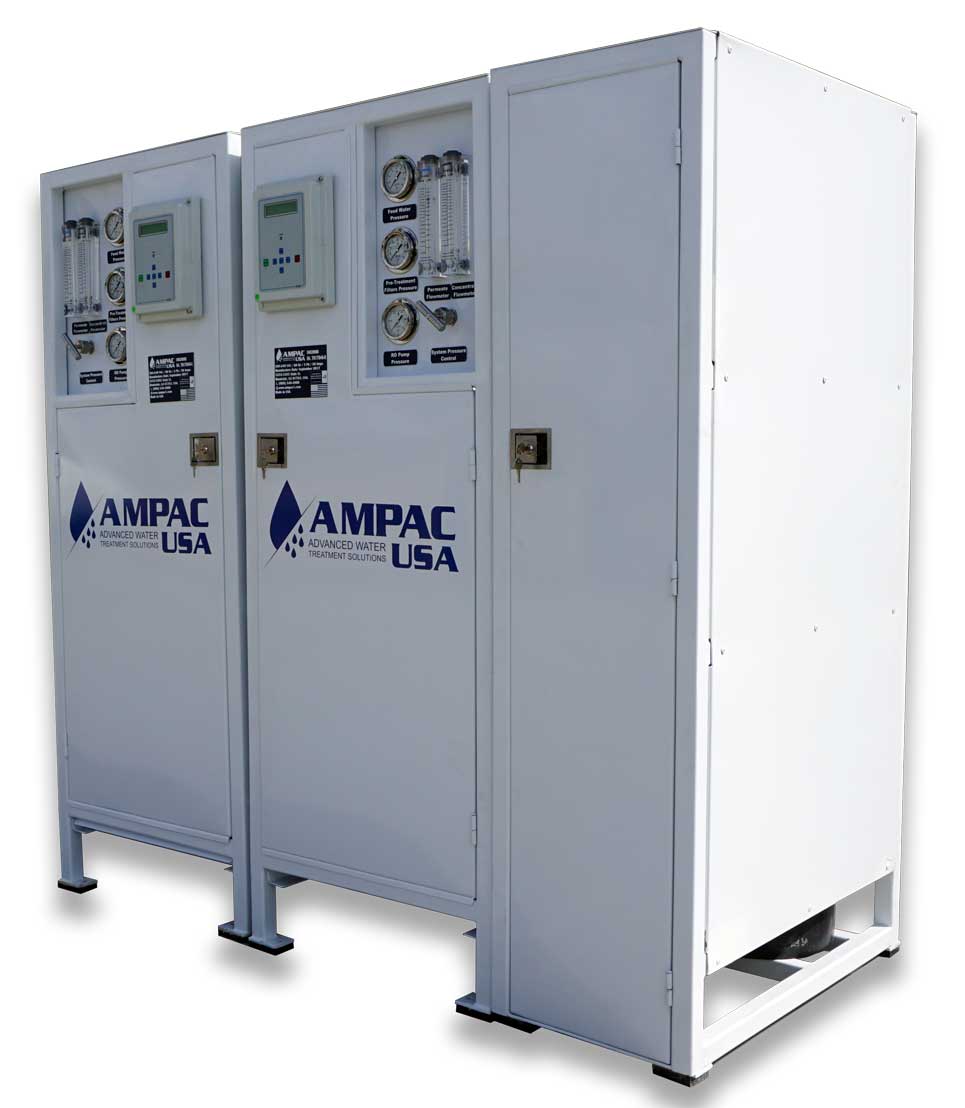
The Twin Redundant system pairs two independent 2,000 GPD / 7,500 LPD trains on a common skid frame with automatic failover logic. Total capacity is 4,000 GPD / 15,000 LPD under normal dual-train operation. If one train trips offline - pressure fault, membrane replacement, scheduled maintenance - the second train continues producing water with no interruption to supply. This architecture is specified wherever downtime carries hard consequences: offshore oil and gas platforms, military forward operating bases, island municipal water supply, and critical humanitarian deployments. Each train operates fully independently, so one train can be taken offline for membrane cleaning, pump service, or inspection while the other remains in production.
Nominal output: 4,000 GPD / 15,000 LPD (2 x 2,000 GPD / 2 x 7,500 LPD trains)
Contact AMPAC for application review, site-specific configuration, and formal quotation: (385) 530-1026.
Related Resources
- Browse All Seawater Desalination Systems — full range of land-based and marine watermakers
- Industrial Reverse Osmosis Systems — high-capacity RO for commercial and industrial use
- Request a Quote or System Consultation — our engineers will size the right system for your application
AMPAC Water Systems designs and manufactures advanced water treatment solutions for commercial, industrial, and municipal applications. From RO systems and PFAS removal to zero liquid discharge and smart water technology — engineered for your needs.