
If you’ve been researching water filtration lately, you’ve probably run into alkaline water — sold in bottles, pushed through ionizers, and now available as whole-house filtration stages. The pitch sounds appealing: higher pH water that tastes better, hydrates better, and maybe even improves your health. But what does the equipment actually do, and do the claims hold up?
Here’s a straightforward look at how whole house alkaline water filtration systems work, what the science does and doesn’t support, and what you need to know before spending money on one.
Key Takeaways
- Alkaline water has a pH above 7.0, typically raised by adding calcium and magnesium minerals through a remineralization stage.
- Whole-house systems use calcite or corosex filter media — not electric ionizers — to raise pH passively as water flows through.
- Health claims for alkaline water are largely unsupported by clinical evidence. The mineral content may offer marginal benefit; the pH itself probably doesn’t.
- Pairing a remineralization stage with a whole-house RO system is the most effective setup for consistently alkaline, filtered water at every tap.
- Maintenance is simple: replace the calcite/corosex media every 6–18 months depending on your water volume and source pH.
What Is Alkaline Water, Exactly?
Plain tap water sits at pH 7.0, neutral on the 0–14 scale. Alkaline water is anything above that, usually in the 7.5–9.5 range for drinking water products. The higher the pH, the more alkaline (basic) the water.
Two things can push pH up: dissolved minerals (primarily calcium bicarbonate and magnesium) or an electrical process called electrolysis. Both get sold as “alkaline water” solutions, but they work completely differently and produce different results.

Mineralized alkaline water gets its pH from calcium and magnesium dissolved into the water as it passes through a filter media like calcite (calcium carbonate) or corosex (magnesium oxide). The minerals raise pH and add hardness. This is what a whole-house alkaline filtration stage does.
Ionized alkaline water comes from an electric water ionizer that splits water into alkaline and acidic streams through electrolysis. These machines are typically point-of-use, plumbed to a single faucet, and cost $500–$3,000+.
If you want alkaline water throughout your home — every faucet, shower, and appliance — you need a whole-house remineralization system, not an ionizer.
How a Whole House Alkaline Filtration System Works
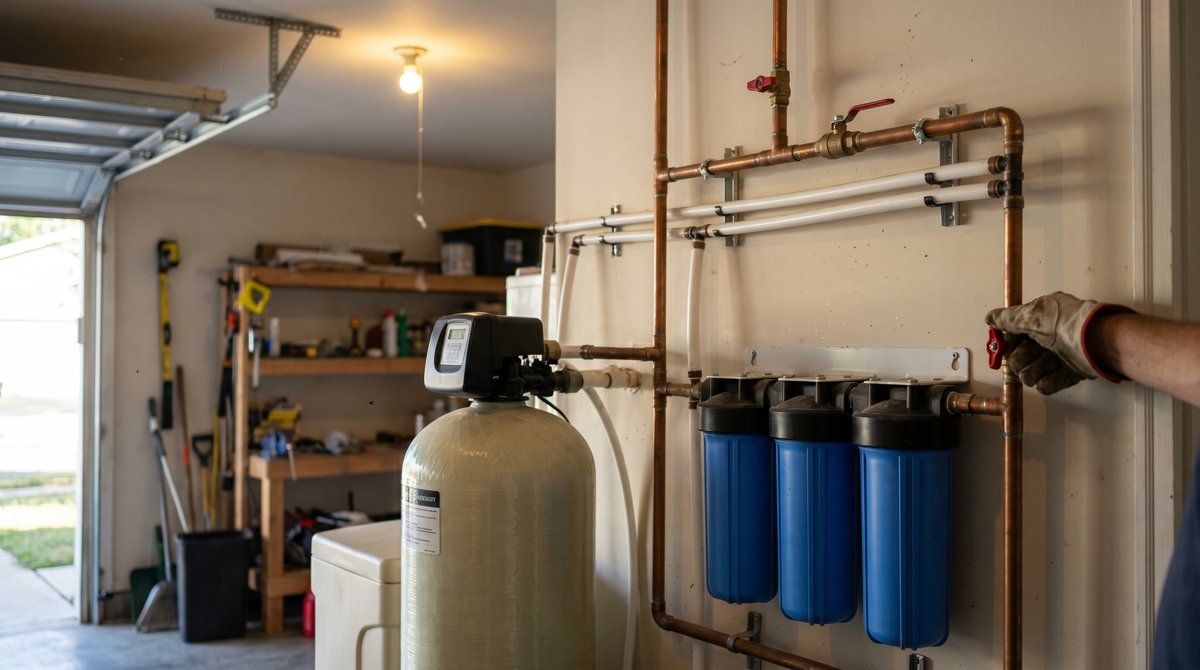
The core of a whole house alkaline water system is a contact tank or inline filter housing filled with calcite, corosex, or a blend of both. Water flows in, contacts the mineral media, dissolves a small amount of calcium and magnesium, and exits at a higher pH.
- Calcite (crushed calcium carbonate) raises pH gently, typically from 6.5 to 7.2–7.8. It’s self-limiting: once the water reaches neutral pH, dissolution slows. Good for slightly acidic source water.
- Corosex (magnesium oxide) is more aggressive. It can push pH past 8.0 and is often blended with calcite at 10–20% corosex to avoid overshooting. Used when source water is significantly acidic (below 6.0).
- Blend media gives you the best control. Most residential systems use an 80/20 or 90/10 calcite/corosex mix.
The system installs on the main water line after any sediment pre-filtration and, ideally, after an RO or whole-house filtration stage. Flow rate matters: water needs sufficient contact time with the media to dissolve enough minerals. Most residential units are sized for 5–15 GPM to cover a typical home.
One thing to know: remineralization adds hardness. If you have a water softener, the alkaline stage should go after it, or you’ll be adding minerals that the softener then removes.
Remineralization Filter vs. Ionizer vs. Alkaline Pitcher: A Quick Comparison
| Whole-House Remineralization Filter | Electric Water Ionizer | Alkaline Pitcher | |
|---|---|---|---|
| How it works | Calcite/corosex media dissolves minerals | Electrolysis splits water streams | Ion-exchange resin or mineral sachets |
| Coverage | Whole house — every tap | Single point-of-use faucet | One pitcher at a time |
| pH range | 7.2–8.5 | 7.5–11.5 (adjustable) | 8.0–9.5 |
| Adds minerals | Yes — calcium, magnesium | No (pH change without added minerals) | Varies by brand |
| Install | Inline on main line | Under-sink or countertop | No install |
| Cost | $200–$800 installed | $500–$3,000+ | $25–$80 |
| Maintenance | Media replacement every 6–18 mo | Electrode cleaning, filter replacement | Filter replacement every 1–2 months |
| Best for | Whole-home coverage, post-RO systems | Single-faucet high-pH drinking water | Low commitment, portable use |
For most homes, the remineralization filter offers the best coverage-to-cost ratio. The ionizer wins if you specifically want very high pH (9.0+) at a single tap and are willing to pay for it. The pitcher is fine for occasional use but impractical as a household solution.
Still deciding between whole-house and under-sink filtration? Our whole house water filter vs. under-sink guide covers the core tradeoffs.
What Does the Science Actually Say About Alkaline Water Health Benefits?
Here’s where you need honest expectations. The health claims around alkaline water range from plausible to exaggerated to completely unsubstantiated.
What has some support:
- A small number of studies suggest alkaline water may help reduce acid reflux symptoms in some people. One 2012 study found that water at pH 8.8 could deactivate pepsin, an enzyme involved in reflux. That’s preliminary, single-study evidence — not clinical consensus.
- The minerals added by remineralization (calcium and magnesium) have well-documented health roles. Whether you get meaningful dietary contribution from drinking water depends on your source water and consumption volume, but it’s not zero.
- Some athletes report preferring the taste of slightly alkaline water. Taste is real, even if the physiology behind it is debated.
What the evidence doesn’t support:
- Your body tightly regulates blood pH in a narrow range (7.35–7.45) regardless of what you drink. Drinking alkaline water doesn’t change your blood pH; your kidneys handle that. The idea of “alkalizing your body” isn’t how human physiology works.
- Claims about cancer prevention, superior hydration, anti-aging, or detoxification aren’t backed by peer-reviewed clinical evidence.
- The FDA hasn’t approved any health claims for alkaline water.
The honest conclusion: alkaline water probably won’t hurt you and might taste better. The added minerals are a real, modest benefit. But if you’re buying a whole-house alkaline system purely for health reasons, set realistic expectations.
Sizing, Cost, and Maintenance
Sizing for your home
Whole-house alkaline filter sizing depends on two numbers: your peak flow rate (GPM) and daily water use (gallons per day).
- A 1–2 bathroom home typically needs a unit rated for 7–10 GPM and a 0.5–1.0 cubic foot media tank.
- A 3–4 bathroom home: 10–15 GPM, 1.0–1.5 cubic foot tank.
- Larger homes or those with high water use (irrigation, pool fill) need larger contact tanks to maintain sufficient dwell time.
Start by testing your home water quality — specifically source pH, hardness, and TDS. That tells you how aggressive your media blend needs to be and whether pre-treatment is required.
Cost ranges
- Equipment only: $150–$600 for a basic inline calcite/corosex filter; $400–$900 for a full contact tank system with media.
- Installation: $100–$300 for a plumber, depending on your setup.
- Annual media replacement: $40–$120 depending on tank size and media type.
If you’re pairing an alkaline stage with a whole-house RO system, the RO unit is the larger cost driver. Residential whole-house RO systems run $1,500–$6,000+ installed. The combination gives you the cleanest, most consistent alkaline water possible at every fixture, but know what you’re signing up for cost-wise before you spec it out.
Maintenance
Calcite and corosex media gradually dissolve — that’s how they work. You’ll need to top off or replace the media every 6–18 months. How often depends on:
- Source water pH (more acidic water means faster dissolution)
- Daily water volume through the system
- Media blend ratio
Check pH quarterly with an inexpensive test kit. If your output water drops back toward your source pH, it’s time to add media. The process is simple: depressurize, open the tank, pour in new media, reassemble. No special tools required.

Pairing an Alkaline Stage with Whole-House RO
Standard RO membranes are effective at removing dissolved solids, contaminants, and minerals — which is exactly what you want for purification. But that process also strips the minerals that buffer pH, so RO permeate is often slightly acidic (pH 5.5–6.5) and flat-tasting.
Adding a remineralization stage after RO solves both problems: it restores calcium and magnesium, raises pH to a comfortable 7.2–8.0, and improves taste. This is why our alkaline RO drinking filter includes a dedicated remineralization cartridge as a final stage.
For a whole-house application, the sequence typically looks like this:
- Sediment pre-filter — protects downstream equipment
- Carbon filter — removes chlorine, chloramines, VOCs
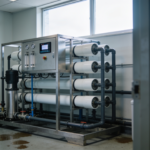
- Whole-house RO system — removes TDS, heavy metals, nitrates, bacteria
- Remineralization/alkaline stage — restores minerals, raises pH
- Distribution — alkaline, purified water to every fixture
This setup makes sense for homes on well water with multiple contaminants, or municipal supplies with high TDS or PFAS concerns. For commercial or industrial applications requiring a full system build, see our guide on choosing an industrial RO manufacturer. The alkaline stage is the finishing touch, not the primary treatment.
If you’re only dealing with slightly acidic tap water and want to raise pH without full RO, a standalone calcite filter on the main line is a much simpler and cheaper solution.
Frequently Asked Questions
Does a whole house alkaline water system actually raise pH at every tap?
Yes, if it’s correctly sized. The key is contact time: water must flow slowly enough through the calcite/corosex media to dissolve sufficient minerals. If the system is undersized for your home’s peak flow rate, water moves through too fast and pH won’t rise as much. A properly sized unit will consistently deliver 7.5–8.2 pH at all fixtures. Test it after install and at each quarterly maintenance check.
Will alkaline water damage my pipes or appliances?
Slightly alkaline water (pH 7.5–8.5) is generally safe for plumbing and appliances. Mildly alkaline water is actually less corrosive to copper pipes than acidic water. If you push pH above 9.0 with an aggressive media blend, you can get calcium scaling on fixtures and in water heaters over time. Stay in the 7.5–8.5 range and you won’t have issues.
Can I add an alkaline stage to my existing water softener or RO system?
Usually yes. For a softener: install the alkaline stage on the bypass line or after the softener, since softened water is already treated. For point-of-use RO: most systems have a port for a remineralization cartridge as a 5th or 6th stage — check our alkaline RO drinking filter for a direct-fit option. For whole-house RO: add the contact tank on the post-RO line before distribution. Contact us if you’re unsure about your specific setup.
How is a whole house alkaline system different from a water softener?
They do opposite things. A water softener removes calcium and magnesium (hardness) by ion exchange, replacing them with sodium. An alkaline remineralization system adds calcium and magnesium back to raise pH. Running water through a softener and then a remineralization stage would be counterproductive. If you need both softening and alkaline water for drinking, a better approach is whole-house softening plus a dedicated point-of-use alkaline drinking filter at the kitchen sink.
Conclusion
A whole house alkaline water system is a legitimate, low-maintenance upgrade — particularly if your source water is acidic or you’re running a whole-house RO system and want to restore mineral content. The equipment is straightforward, the maintenance is minimal, and the taste improvement is real.
What it isn’t: a dramatic health intervention. The honest case for alkaline whole-house filtration is remineralization after aggressive purification, mildly better taste, and less corrosive water for your pipes. If those benefits match what you’re actually trying to solve, it makes sense. If you’re chasing broader health outcomes, you’ll be disappointed.
If you want help sizing a system for your home or figuring out how an alkaline stage fits into your existing setup, contact our team. We’ve been building water treatment systems since 1993 and can point you to the right configuration without overselling.
Browse our residential water treatment systems or test your water quality first before making any equipment decisions.
PHP: 2026-06-12 17:54:32 [notice X 0][/home/ampacws/htdocs/ampacwatersystems.com/public/wp-content/plugins/elementor-pro/core/database/model-base.php::66] ElementorProCoreDatabaseModel_Base::query(): Implicitly marking parameter $connection as nullable is deprecated, the explicit nullable type must be used instead [array (
‘trace’ => ‘
#0: ElementorCoreLoggerManager -> shutdown()
‘,
)]