How to choose a commercial reverse osmosis system
The right commercial RO system starts with your water, not a product catalog. Municipal water at 300 ppm TDS is a different design problem than well water at 1,200 ppm. A system sized for the first will underperform badly on the second - and no amount of membrane swapping fixes a fundamentally wrong specification.
Get a water test first. A basic analysis identifies TDS, hardness, iron content, chlorine levels, and any contaminants of concern. That data drives everything: membrane type, pre-treatment requirements, sizing, and expected maintenance intervals.
Commercial vs. residential RO systems
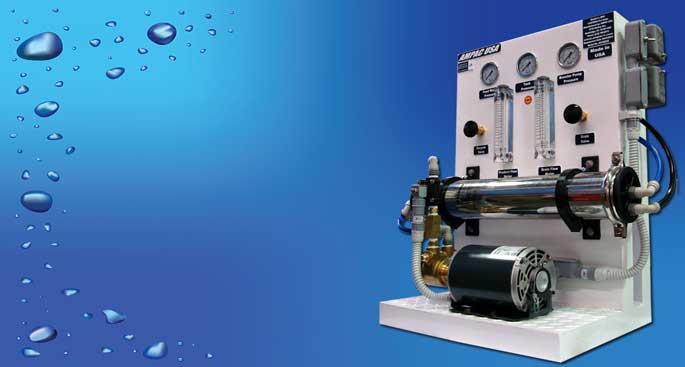
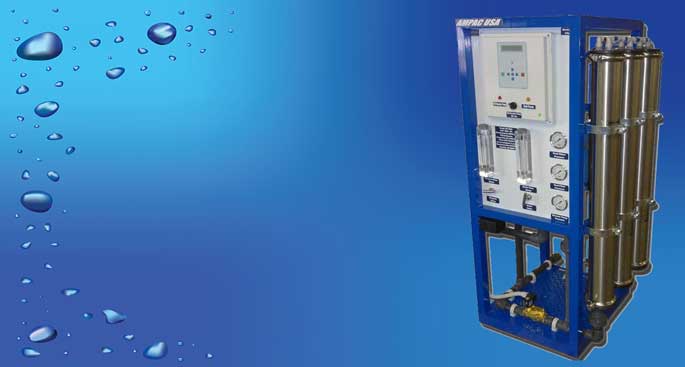
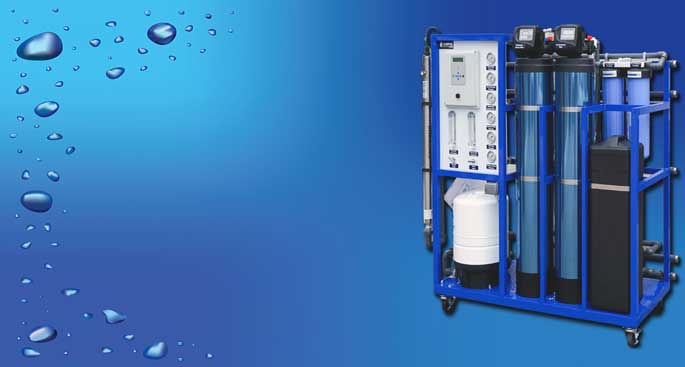
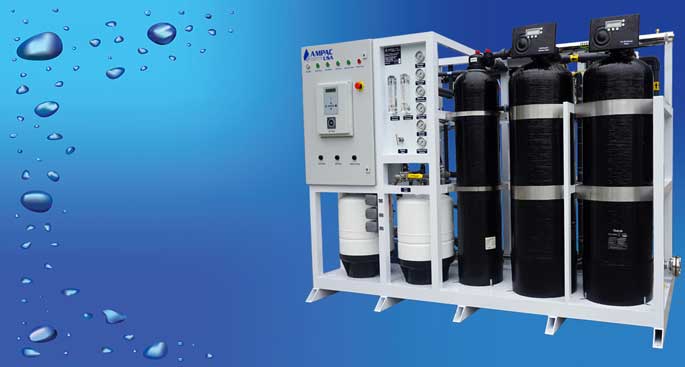
A residential RO system fits under a kitchen sink and makes a few gallons of drinking water a day. A commercial reverse osmosis system does a different job. It's built for continuous, high-quality water output across commercial applications like restaurants, hotels, clinics, and bottling lines. AMPAC commercial units range from 100 GPD up to 10,000 GPD, with larger multi-train configurations available for heavier demand.
The construction reflects that difference. Commercial systems use larger membrane housings, higher-capacity pumps, and industrial-grade frames built for daily, uninterrupted operation rather than occasional home use. A commercial system costs more upfront than a residential unit. A properly sized one pays that back in lower per-gallon water costs and fewer service calls.
Sizing by daily production requirement
Commercial RO systems are rated in gallons per day (GPD). Match the system rating to your actual daily water demand, with a 20-30% margin built in for peak demand and membrane aging.
A small restaurant drawing 100 gallons of purified water daily needs a 150-200 GPD minimum. A hotel laundry operation or bottling line drawing 1,000+ gallons daily needs a 1,500-2,000 GPD system. AMPAC commercial systems run from 100 GPD through 10,000 GPD, with multi-pass and multi-train configurations for higher-demand applications.
Pre-treatment: the part buyers underestimate
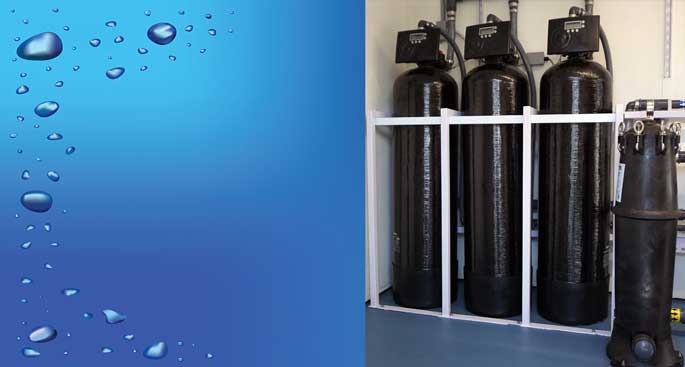
The RO membrane is the most expensive component in the system and the first casualty of improper pre-treatment. Sediment pre-filtration protects the membrane from particulate damage. Carbon pre-filtration or chemical dechlorination is mandatory - chlorine degrades thin-film composite membranes within months, not years. If source water is hard, antiscalant dosing or a softener upstream extends membrane life from 1 year to 3-5 years.
Cutting pre-treatment to reduce upfront cost is one of the more reliable ways to increase total cost of ownership.
NSF/ANSI 58 and compliance documentation
Food service and beverage applications typically require NSF/ANSI 58 certified systems. Pharmaceutical and laboratory uses carry additional requirements. AMPAC commercial systems are NSF/ANSI 58 certified on membrane components and manufactured in the USA with material traceability documentation available for regulated environments.
Maintenance schedule
Quarterly TDS rejection and flow rate checks. Semi-annual or annual pre-filter cartridge swaps. Periodic membrane cleaning or replacement based on feed water quality and utilization. Main unit service life is 10-15 years. Membranes run 2-5 years. Contact AMPAC for a system-specific maintenance protocol before commissioning.
Which commercial RO capacity fits your facility?
| Capacity | Range | Typical facility |
|---|---|---|
| 100–800 GPD | Commercial Reverse Osmosis 100 / 200 / 400 / 800 GPD | Cafés, clinics, small labs, single-point process water |
| 1,500–2,200 GPD | Commercial Turnkey RO 1,500 and 2,200 GPD | Restaurants, small hotels, water stores |
| 3,000–6,000 GPD | Commercial Turnkey RO 3,000 / 4,400 / 6,000 GPD | Hotels, schools, bottling, light manufacturing |
| 6,000–25,000 GPD | Industrial RO 6,000 to 25,000 GPD | Process water, boiler feed, larger manufacturing |
| Specialized | Brackish Water RO 500 GPD, Alkaline AP3000-LX-ALK, Super Water Store AP3000-SM | High-TDS feed, alkaline output, retail water stores |
Sizing is by daily demand rather than peak flow, and storage is almost always cheaper than a larger system. Work through the numbers with the AMPAC RO system calculators — design inputs, stream data, recovery, concentrate chemistry, and operating cost.